Tuesday, November 24, 2020

how will 2020 punish students further?... let me count the ways.

 Y'all...

I'm a little late to the game here... but I'm sure that's no surprise to anyone. For me personally, and for many others I've talked to, 2020 has been an exceptionally terrible year. As a student, finding ways to juggle all of the punishments that this year has brought my way has been a nearly impossible task. The possibility of my entire future disappearing just like that. A series of unfortunate events. The pressure. So, I figured I'd start off by rambling about all the things I feel, and all the things you may feel, in an act of solidarity. Although, I know I'm simply shouting into the void.

You're not wrong for struggling with online classes. 

Many of the classes that have transitioned from strictly in-person to strictly online have failed to take into account, as Akyol and Garrison (2008) expressed, that an online class must be constructed in an entirely different way. It is more difficult for us to effectively engage with professors and our peers, and the work it takes to make up for this should replace some of the busy work usually handed out as classroom activities. As a student who used to struggle paying attention and participating in grade school, I had to learn how to adapt in order to get what I needed out of my classes. So, I found that what worked best for me was studying and doing assignments in the library, even though I had a perfectly good desktop at home. I would also stay after class and talk to professors, collaborate with peers in person, and I worked best when I hand wrote as much as possible. Attending class and being forced to keep my focus on the lecture was also crucial. If I didn't have perfect attendance, my grades would slip or I would spiral... weeks would go by. A professor once even called me their "ghost student." Now, the challenge for students, the same as professors, is "what do we do for learners who cannot learn online?" and I'm not sure there is an answer. Perhaps a more lenient late work policy... perhaps the ability to make up work... but what about students whose home life is distracting? maybe even dangerous? What about students that live in rural counties? Students who lost their jobs? Students with COVID? Students experiencing loss due to COVID? Students with ADHD? Students with mental health issues made worse by sitting at home all day? Neurodiverse students? How does a professor really know who's struggling, when the professors themselves are struggling, and all the students are just names on a roll sheet on a computer screen? How do we know anything?


The traditional pedagogical approach isn't working and it shows.


This tweet really stuck with me. Of course, it is a hot take, but I thought I'd share.

https://twitter.com/hoodqueer/status/1330656596922347524?s=20


Surprise, surprise, everyone. In an effort to make the most out of my situation, I will be breaking the rules and double posting. However, to give myself the much needed breathing room between blogs, I will be plopping one in once a day. Sorry, Karen!


#yourenotwrong

Sunday, November 22, 2020

#RethinkingStatus in Our Program

 For this last (last, last, last-minute) post, I want to think about rethinking status in our very own graduate program. When I think about status in the UNT Comm Grad Program I do not say "Ah, what a microcosm of our world," because, for obvious reasons, it is not. Few small communities are genuinely the microcosm that conventional wisdom tells us they must be. Instead, they are a specific amalgamation of community members who are brought together for some purpose. Maybe that purpose is spatial, maybe that purpose is hobbyist, and maybe that purpose is academic (and therefore sort of a combination, eh?).

Either way, a community is often shaped by a set of histories or myths that help to mediate the cultural norms that are prominent in that community. Those myths and histories are often hard to trace back to an individual, but they do a great deal to shape what is expected of the individuals who take part in that community. Here's a few norms/myths that I've noticed in our community:

  • You will be tired
  • You will be stressed out
  • You will have to work very hard
  • Your students will make your crazy
  • Your mental and physical health will be impacted
  • A graduate degree in this program will enhance your critical thinking skills
  • A graduate degree in this program is worthwhile
  • Completing a graduate degree in this program will force you to make sacrifices 

 For the most part, I can agree with these myths: I think that, like most myths, there's truth to them. In most cases, I agree with them wholeheartedly. However, some of the ways that the truth to these myths seems to be enacted ends up being somewhat...problematic. I've experienced an abundance of students who are so wrapped up in the perceived truth of these statements that they become their whole life. 

(The following are examples and please, please, please, do not take them as me trying to call someone out - they came out of my brain)


"Ohmygod I think I've only had coffee and a cheese stick to eat today."

"I swear, I've only slept an average of 3 hours each night this week."

"I was in the space until 3am last night. And the night before...and the night before."

"I think grad school might kill me, I'm just so miserable."

"I just figure I'll be miserable for the next year and a half, ya know?"


These are, by my account, harmful!! Not only does the continued verbalization of these things normalize them for you, they normalize them for others. Further, several of these statements seem to operate as a currency in our environment. Folks are making the statement about how little they slept not as an admission of guilt about not taking care of their bodies, but as a way to demonstrate how much they care, or how much they match the mythology of the program.

This, in turn, has the capacity to become a status marker. Because X has demonstrated that they are willing to take the worst care of their physical and mental health, they have demonstrated that they are the most invested in this program, and thus deserve praise and admiration. Or, X's commitment to the program in the face of their mental and physical health serves as an example of what is appropriate behavior to "fit in."

These are oversimplifications of the thought processes in peoples heads, but I think that they're uncomfortably close to the truth, and they make me worried. Why do we take for granted and perpetuate the kind of stress and lack of sleep and nutritional deprivation that is normalized for us as graduate students? I understand that part of it is due to a legitimate lack of financial means to support one's well-being, but I think that it goes much deeper than that.

I don't have the answers for this one, and I honestly don't feel like I'm engaged enough with the culture of the program to really understand it. How do you all feel? Do you feel like you're being pushed to a state of exhaustion as the norm? If so, how do we work to change that standard?

Thursday, November 19, 2020

Staying the Course is a Journey

Volume 1: Post 4


Let’s Hop in the Boat named “The Pop Culture Communion”

Caution: [Grab your oars!]


LISA SCHELLENBERG NOVEMBER 18, 2020


“Popular culture is ‘the connections that form between individuals and objects’ (1)…who ‘experienced some kind of emotion, feeling, or information-sharing based on cultural interaction…[and] exists as the connections between people and cultural artifacts…” – Bob Batchelor (2013)


The first time I walked into a classroom with music playing was in Professor Frohlich’s Speech 1311 class. He would end up playing music as we entered each class. After everyone arrived, he would ask us questions which would connect the course content to the lyrics. After that course, TCC Geology Professor Fairbanks, and UNT Dr. Anderson-Lain would follow. Some professors started the class with news, TV, or movie clips like Professor Brewer, Dr. Lain, TA Munger, and more. Dr. Richardson illustrated examples of sports communication concepts through YouTube videos, music, full-length movies, and guest speakers. Have your teachers utilized fashion, technology, or other forms of popular culture in your classes? Popular culture #EnCourages “alternative narratives for our lives and relationships, explore new choices, and expand our thinking about diversity”.


Learning occurs in teaching environments where there is a narrative structure and cultural context. How do you express popular culture in your class or life? Your collective life is the “heart of the study of popular culture…[and] communities share their collectives lives through artifacts, icons, ideas, language, rituals, and symbols” which unite individuals. In my freshman year of high school my ritual was to go windsurfing. Then in my Sophomore year, I sailed in a sailing team competitively. No oars needed! I was trained to #StayTheCourse as we would sail to Catalina, Mexico, and Newport Beach.


I remember in Dr. Lain’s 2140 course how you could tell who a democrat was, who was a republican, and who was a liberal. Furthermore, you could tell which small groups worked well together and which struggled. The class provided time for students to share stories of how we feel, our experiences, our ideas, and what we think the answers are to his questions. The use of popular culture really made an impact on our teaching. What an #EnCouragement! The course was a difficult one for me to grasp since I had experience in a similar assignment in Professor Frohlich’s class and was confusing the two courses, to which Dr. Lain quickly inquired and corrected me.


My Spanish classes also helped me understand “the relationship between people, symbols, and culture”. We watched short videos on cultures of Latino countries and then we shared our individual culture by stating what is similar and what is different between the people and customs. This teaching style #EnCouragedMe to continue to attend the classes because it kept me engaged and it was quite interesting. How do you keep students engaged with pop culture? How do you keep yourself entertained with pop culture?


I enjoy music on an almost hourly basis. I wake up to Alexis playing The Lumineers or Lana Del Rey until I leave for work. In the car, I listen to KXT, and when I arrive to my office, I play iHeart Alternative Radio, one of my Spotify playlists, or KXT.


The first class I attended where I learned something about my identity was my British Literature course at TCC with Professor LeeAnn Olivier where I learned about Campbell’s The Hero’s Journey. We watched the movie as homework which helped us learn popular culture and develop our own sense of identity as we learned what major event took us on a journey (mine was when I decided to attend college): called us on an adventure, cross the threshold, stubble upon a mentor, have a revelation, be transformed, have an atonement, then return. What major event did you get into a boat, go on a journey, and experience all of that? Did you receive #EnCouragement to #StayTheCourse? Did it cause you to #EnCourageOthers like it did me?


Boating and sailing in the open waters offer me a space of freedom, reach across time, self-reflect, and look at my life (past, current, and future stories). If I go with someone (which you would need to do in a sailboat) we end up sharing our viewpoint, stories, experiences, advice, thoughts, and “make them a part of our own stories”. Grab your oars and head out to the open water, especially during COVID. Play some music, let it #EnCourageU and #StayTheCourse!


Hammonds, K., & Anderson-Lain, K. (2016). A pedagogy of communion: Theorizing popular culture pedagogy. The Popular Culture Studies Journal, 4, 106-132.


Wednesday, November 18, 2020

Staying the Course is a Journey

 Volume 1: Post 3 

Caution: Are You Aware of Your Cultural Identity?

               [What’s Your Song?]


LISA SCHELLENBERG NOVEMBER 18, 2020


“One’s self image is composed of an independent self that includes one’s feelings, cognitions, and motivations and an interdependent self that is concerned with ingroup obligations and connectedness”. – Markus and Kitayama (1991)


[*In this post I am self-disclosing a bit]


In the Spring of 2019, I took Intercultural Communication and no clue what I was in for. I chose the course for three reasons: It is an interpersonal course (my field of study), my favorite professor was teaching it, and because I felt I needed to learn about other cultures and diversity. Within the first month, the professor instructed us about the Cultural Identity Forum and how we would create a project that would demonstrate our true identity to our classmates which, in turn, would inform ourselves.


After discussing the details of the project and my ideas with my TA, I was #EnCouraged to create a soccer ball (because I have been a soccer mom to all four of my children spanning 16 years), cut a hole at the top, place a scarf inside, attach items that represent my true identity to the scarf, and write stereotypical words on the outside of the ball. This assignment “demonstrate[d] self-reflexivity of [my] cultural identity” and “the self-awareness imperative for studying intercultural communication [which] challenges students to explore their ethnocentric thinking, their social and economic position in society, and their privilege”.

This assignment was so impactful that I was shocked, amazed, happy, proud, tearful, proud, transformed, and provided #EnCouragement for #StayingTheCourse. I couldn’t believe the impact that one course could have on my self-image and my life. What a “profound influence” the assignment (due from learning my self-image) had on how I “construct[ed] meaning, form[ed] relationships, and [understood] cultural differences”. I chose a song at that time that was my mantra of the time: Don’t let me down by Chainsmokers. This was because I realized that my husband would never accept my identity and support my decision to attend college because I wanted to provide my children financial assistance with an education so that they don’t struggle in life.


I would like to #EnCourageU, as TA’s and students, to learn and perhaps participate in the assignment this Spring. Like I said, it was thee most impactful assignment in learning about my identity in my entire (over 30 years since I first entered college) upper education. The cultural identity forum challenges students (and you) to discover ethnocentric, social, economic, and privilege in the world in which you live (Anderson-Lain, 2016). For example, my professor was giving a lecture on marginalization and I realized at that moment that my mom (a single-parent household that received $125 per month from my father from 1973-1989) was living in poverty for reasons beyond her control. She worked 2-3 jobs for most of her life. The jobs Lynn worked were not easy. She owned her own house cleaning company and worked in the outside ailments as a pool monitor, to name a few.


What was her #EnCouraging factor? Lisa. She spent her money providing for me, renting two bedrooms in an affluent neighborhood in Dana Point, California (our high school had surfing, water polo, and sailing teams), and making sure I had Guess, Jag, and other name brand clothes. One interesting, and very sad fact, was that we had one (YES ONE) black student. We had a lot of Hispanic students and Asian students. I don’t remember LGBTQ students, but I do remember the fear of contracting Aids and HIV. I further remember slangs and stereotype identifiers such as chickee-babies, cronies, smokers, gangbangers, jocks, richies, and lowriders and how wrong it was to even use those words. How sad to learn in this class that these “societal structures constrain[ed] [my] identity and reinforc[ed] systems of oppression and social injustice”.


These social, historical, privileged, and unique social influences shaped my identity. Let’s be #EnCouraged that a Change is Gonna Come, Sam Cooke (1964) one day. I know I changed and every day I am learning my cultural identity, what factors influenced my identity, and how I can change my thinking through communication with others and learning from my professors and peers. The songs I have been identifying with nowadays are Change by Lana Del Rey (2017), Here Comes the Sun by The Beatles (1969), and Going Gets Tough by The Growlers (2014). 


What song are you identifying with right now? What song connects to your cultural identity? What song influenced your identity development? Perhaps you have a song that expresses your social responsibility or diversity. #BeEnCouraged and #StayTheCourse! 


Anderson-Lain, K. (2017). Cultural identity forum: Enacting the self-awareness imperative in intercultural communication. Communication Teacher, 31, 131-136. doi:10.1080/17404622.2017.1314529

Staying the Course is a Journey Volume 1: Post 2

Caution:  Do You Know Your Inner Landscape?

[Grab your Map if You Don’t]


LISA SCHELLENBERG NOVEMBER 18, 2020


“It goes on one at a time, it starts when you care to act, it starts when you do it again after they said to do it again after they said no, it starts when you say We and know who you mean, and each day you mean one more.” -Marge Piercy, “Low Road”


I wish to share with you my inner soul – my inner landscape – and ask you to discover what your inner landscape is. I #EnCourageU to think about it, answer the question, and then celebrate your identity, and self through refusing to harden your heart and continue to love to learn and teach.


[picture of San Clemente Pier at sunset]


I started to teach at age 18 when I decided to follow Jesus and became born again in San Clemente, California and served in Sunday school. I loved telling stories in a performative way-funny huh (considering I am not in the performance field of communication studies). I loved my work so much that I #StayedTheCourse to work as a Sunday school teacher until 2013 (at age 43!). The students, pastors, co-teachers, and parents #EnCouragedMe to continue as they stated “I had a heart for teaching”.


According to Palmer, “teaching…emerges from one’s inwardness” and the experience I gained in these Sunday school classrooms came from my inner landscape. It is important that we know ourselves in order to teach well because when we don’t, we can’t understand our students. Let’s instead, use this pedagogy as #EnCourageMeant so that we can make a difference in our students’ lives like so many of our communication studies professors have done for our inner landscape.


“Self-knowledge is the hidden secret in plain sight”. – Parker J. Palmer

I remember the first time I was so upset at one of my TCC NW teachers that I told my mentor. The teacher went super-fast with the PowerPoint that I was unable to take notes. I had asked the teacher after class if she could go slower or provide me with the PowerPoint, but she replied “No”. My mentor looked at me quizzically because I seemed to be rambling on and on with complaints.


Instead of being #EnCouraging and optimistic, I was teacher-bashing and quite negative. My mentor realized I had ADHD (other instances also caused suspicion) so she recommended I see my doctor. I ended up getting approved for accommodations and did receive the PowerPoints. As Parker points out, when teachers (and I believe as students as well) are “panic-stricken by the demands of the day, we need scapegoats for the problems we cannot solve”.


When we are having daily interactions in our peer mentoring circles, TA space, Zoom break-out sessions, phone calls, and eventually, in-person, and we self-disclose teacher-bashing or student-bashing, let’s #EnCourageEachOther to “cherish-and challenge-the human heart that is the source of good teaching”.


We are already having a hard time to survive (be successful in all that we do) in graduate school both as citizens, workers, students, relationships and in our personal lives but when we are combating possible conflicts and negative interpersonal relationships, we jeopardize our teaching and learning. Let’s not blame our teachers or our students. Let’s choose to remain #EnCouraged and #StayTheCourse to be successful and remember that they are the ones “who could help us find our way”.


We can consider a metaphor for our map. A map could be the places we have traveled, lived, and/or visited in our life thus far. So, I have lived in California, Alabama, North Carolina, Florida, and Texas. These encompass my map. I can’t rip apart my map into pieces and say I have only lived in California-my map needs to remain in one piece. This landscape is our inner and outer self which taught us and therefore allowed us to learn and teach others.


[picture of an older map of the United States of America]


Our travels included our intellect, emotions, and spirit as a whole within our human soul and education. Ask yourself how you know and learn, how you feel as a teacher and learner, and what diverse ways you long to connect to teaching. The more we learn about our inner landscape (self) the more confident we are as teachers and as individuals. How #EnCouraging!


Let’s #EnCourage and guide our students (and close relationships too) on taking an adventure by grabbing their map, and finding their inner landscape “toward more truthful ways of seeing and being in the world” because “teachers possess the power to create conditions that can help students learn” so much.


We can do this! I hope I #EnCouraged you! I hope I leave behind a legacy as a #EnCouraging mother, granddaughter, daughter, niece, cousin, friend, mentor, student, peer, employee, future boss, and colleague. It’s hard but we can #StayTheCourse!


[picture of my nana, papa, and me. I am 20 years old.]

Palmer, P.J. (1998/2007). The courage to teach: Exploring the inner landscape of a teacher’s life. SanFrancisco: Wiley & Sons.


Tuesday, November 17, 2020

I Want A Hope-opopotamus For Christmas

    "I want a hippopotamus for Christmas. Only a hippopotamus will do." I don't want Trump. I don't like the hate. Only a hope-opopotamus will bring us all some joy. If you sang the last three sentences in your head to the rhythm of I want a hippopotamus for Christmas, then you did exactly what my brain has been doing with every thought for the past week. The last year has been daunting to say the least. As I sit here on my couch and attempted to tell you how to #FuckTheNorm, I am overrun with the extreme amounts of hatred in the world. Showing hatred, distain, and demonizing people for various reason has become a new normal, and that is not okay.

disney animated animation GIF by Disney

(Hippopotamus figure spinning in a circle on one foot with their mouth open, presumably happy)

    The purpose of this blog entry is to call for an everyday action: kindness. At this point in society, everyone views clash with someone else, however hate is hurtful. Choosing to believe in positivity and unity is what will lead people to want to cooperate and find points of agreement. Additionally, when individuals find collectivity through kindness it allows for community building to form. "Community, understood in conjunction with solidarity and coalition, lies at the center of a feminist value system (hooks 43). As a concept, community refers to the understanding that members of a group have of themselves as a collective and how they relate to each other based on that understanding." This quote can be accessed here: https://my.vanderbilt.edu/femped/habits-of-heart/community/

    As individuals in a collective society, we have collectively lost sight of finding common ground and understanding for different positions. The new "normal" is to stand on one side of an issue and stay there. However, when thinking about different forms of pedagogy that we have learned throughout the semester, if everyone had said that they were not going to listen to the philosophies of Freire or hooks or decided to not read Fish, then we would never have exposer to different ideas. I can imagine at the end of the semester that none of us will have the exact same philosophy for teaching or engaging students. In that same regard, in our classroom environment we expand on ideas and ask questions, whereas the majority of people in society do not. We have to shoot positivity and understanding into the world.

jim carrey christmas lights GIF

(Person from The Grinch who is shooting a cannon that strings lights moving from one side to the other in a shooting fashion)

    Times have changed from having one computer in the house to most people have multiple computers of different sizes in their procession. The access to information, whether that be misinformation, disinformation, or factually based information, is at an all time high. However, the amount of information sharing and absorption that happens on a given date has exponentially increased from generations prior. Understanding that everyone is constantly taking in information on various topics at a giving time has lead to the new norm of polarized thought that closes of an individual's mind. 

    In graduate school, we are constantly surrounded by information. Being surrounded by information on a constant basis can leave to people becoming overwhelmed. If you do not believe me, check out almost any other post on this blog. We become discouraged and lose hope for a brighter future at points of consumption due to effects of polarized thought. We have to have understanding. We need hope in this trying time of COVID and politics. To be more specifics, we need a Hope-opopotamus for Christmas! We have to give out positivity and understanding for it to be reciprocated. Be the Hope-opopotamus and #FuckTheNorm of polarized grouping. Attempt to understand individuals who are coming from a different position than you, but always take the time to self-care because you have to put yourself first. Here is to hoping for a Hope-opopotamus for Christmas 2020! #FuckThe Norm


Articles referenced:

https://my.vanderbilt.edu/femped/habits-of-heart/community/


Monday, November 16, 2020

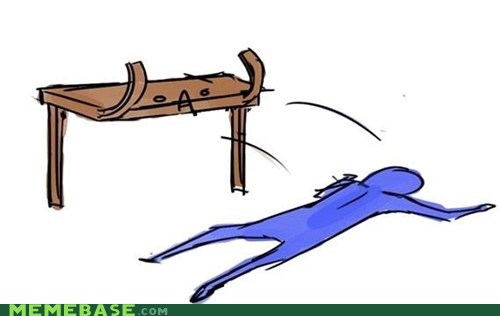
A few snap backs: Reached the calm before the storm, & the tables have yet to turn

Knock knock? Whose's there? Many. Many, who? Many people are sad. A comment that started off as dark humor but turned into a not so funny joke anymore. We are still trying.

A few snap backs. To recover. To make way quickly to where we need to reach. We have reached the calm before the storm but every matter still feels like trying attempts to succeed, or rather barely hold on. Reading blog post, after blog post. Wanted to end this blog series on a positive note. Yet, we end on a realistic note instead. We are struggling. Talking to students, peers, and professors. And making the continuous comments of "We are just trying." "The semester is almost over." "It gets better."

Reaching the calm before the storm. Going through the first semester of grad school at UNT, every week felt like a week to go through. I kept reminding myself that I will eventually gain the rhythm and find my way to succeed. We reach the last few weeks, and I admit. I am still struggling. I feel in the same place as the beginning. And surprisingly, I still am hopeful that academia will be what I want to continue for the rest of my life. All my colleagues and professors continually reassure me, yet I feel that everyone believes in me besides myself. Though I appreciate all the kind words, I also recognize the imposter syndrome. What a concept.

One realization in grad school: It gets better. The tables will turn (eventually). It has to. Or at least, we will make it to the end.

The tables have yet to turn. As the drop date just passed, I noticed how many of my students who struggled eventually dropped the class. In 3010, I started with 11 students, now only four remained. I felt disheartened because I believed in the students, but I understood that they took a break and did what they needed to do.

As the semester goes by, I can feel the tense atmosphere while teaching class, as everyone does their best to try, to remain focused, to cling to the last bits of hope to get through. I remember in 2410, as my first set of students were about to start their practice run of the debate, one of my students started a 3-minute spiel that went along the lines of: "We honestly have no idea what we were supposed to prepare. We tried. I promise. Can you walk us through? We're struggling, but I promise we are putting in an effort. We just don't know how." I took a step back and let my empathy come into play as I walked my students through the debate, reassuring them they had all the pieces to the puzzle and they can put everything together. The practice run of the debate ended with a success, relief from students, and more smiles.

The experience with my students foreshadowed my encounter with my professor in Feminist Criticism (Side note: Love Suz. Rhetoric? Not so much). This class took a toll on my semester. Reaching the last weeks of Fem Crit, I have yet to understand what rhetoric means or how to critique. I met with Dr. Enck individually to talk about my final project. In the mid of the meeting, I paused, sighed, and told Dr. Enck: "Suz, I'm sorry. I'm trying. I promise. I know I have not participated as much as I want to but it will get better. Eventually." She made sure I was okay and continued to guide me to answer the questions. We continue to talk and *snap* I reached a point where some of the subject matter finally clicked. Finally made sense. As the meeting came to an end, I smiled, feeling like I gained a sense of direction on where I needed to go. The path to the end felt just a bit clearer from the previous fog that lingered throughout the class. I thanked Suz and left the meeting with a smile on my face, finally experiencing a sense of confidence to finish the project to the best of my ability. Or rather, I accepted that I could gain the ability to understand rhetoric at all.

As our #journeyofuncertainty comes to an end, we remain uncertain. And the tables feel like they have yet to turn. But maybe that's ok. Taking everything one step of the way and learning to recognize situations for the way they are. To appreciate both the highs and the lows. Even if the lows feel harder and seem to outweigh because losses loom larger than gains (Kahneman & Tversky, 1979). Maybe the end goal was to try. To continue to try and enjoy the small steps along the way. To find our team. And root for those who root for us endlessly. Because, my friends. The Communication Studies Department of UNT. We definitely reached that point.


One way to snap back: Find the joys in the little things and acknowledge what you have achieved.


Cheers to more of our journey! Baby steps to reach all our dreams and another step reveals our team. Thank you for being a part of my journey, my friends. #journeyofuncertainty


Citations:

Kahneman, D., & Tversky, A. (1979). Prospect theory: An analysis of decision under risk. Econometrica, 47, 263-291.

TED-Ed. (2018, August 28). What is imposter syndrome and how can you combat it? - Elizabeth Cox [Video]. YouTube. https://www.youtube.com/watch?v=ZQUxL4Jm1Lo&t=65s